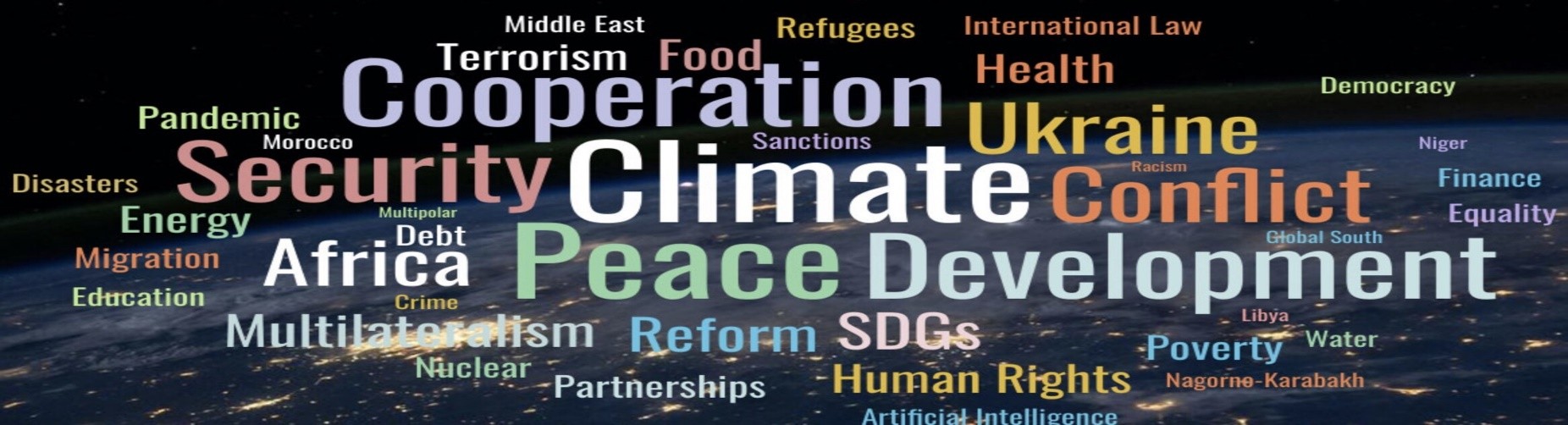
Responding to the Current State of Our World
“If we examine the current state of our world, we must clearly
conclude that not only are we not managing our affairs well,
we are really mismanaging them.”
— A Secular Encyclical
We live in a world of fear and anxiety with many threatening crises. We are not managing our individual or collective affairs well, and we seem to have lost our ability to problem-solve.
“We are bent on destroying our own lives, those of others and the world in which we are playing out the drama of human life.”
— A Secular Encyclical
We are not applying the wealth of knowledge using the procedures and structures that we have developed over the centuries to continue to advance in a way that addresses our current needs. We seem to be observing, as a kind of entertainment, the breaking of our covenants and agreements through our inaction to truly practice the meaning and values we, as humans, have revealed to ourselves.
This perplexity is further heightened by an awareness that we have the knowledge and means to solve our most complicated, most pressing and most challenging problems.
“The root cause of our tragic, divided and dysfunctional state lies in our individual unskilled behaviour in our misguided patterns of action.”
— A Secular Encyclical
If we hope to begin eliminating the serious crises in our world and improve the quality of life for all, it must, in our global village, begin with universal acknowledgement of the seriousness and urgency of the problems. However, awareness and acknowledgement alone are not enabling. Awareness of the dire state of the world, without a hopeful plan for change, now brings despair to many. We must begin with a universal plan to change individual behaviour, brought about by education and learning, starting with what all great spiritual, philosophical, and psychological teachers throughout human history have told us: that transforming the world and living a meaningful life begins with changing oneself.
“The boundaries and resulting pressures stemming from ideology, social and economic positions, ethnic dimensions, politics, and beliefs imprison us in aggressive conflicts with one another and impose on us what we regard as an overpowering need to defend our self-centred, if not selfish, positions.”
— A Secular Encyclical
We must bring our individual skilled behaviour to powerful collective action, accepting the responsibility of being a human being and working together beyond the boundaries of space, ideology, caste, creed, race, religion, and belief, to skillfully act alone yet together to bring about the change needed to lift us from our profound anguish, suffering and crises.
“Given this sad state of failure that we must acknowledge, what is the challenge that it presents to us? It is nothing less than our duty and indeed our obligation to turn things around radically. Expressed in essence, that challenge is simply ‘learning how to live with what we are and who we are”
— A Secular Encyclical